
Food-grade antifoaming agents and FDA regulations
What U.S. food manufacturers need to know about foam control, compliance, and process efficiency.
In today’s food processing industry, uncontrolled foam can compromise process stability, reduce production efficiency, increase product loss, and affect critical variables such as heat transfer, aeration, effective tank capacity, and sanitary performance across high-volume manufacturing operations.
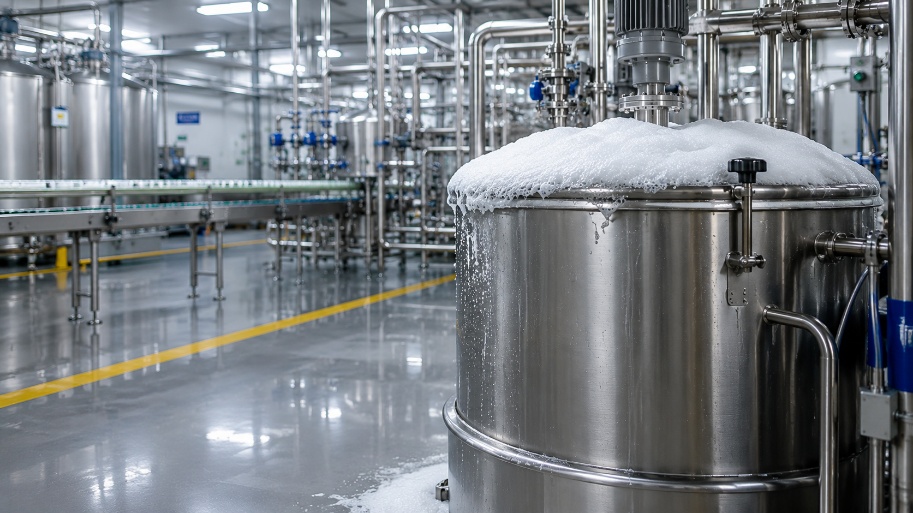
For this reason, antifoams and defoamers have become essential tools in a wide range of industrial food processing operations, especially in continuous production environments where even minor foam-related disruptions can translate into significant operating costs, unplanned downtime, and quality risks.
Did you know that antifoaming agents and processing aids must comply with applicable FDA requirements and other safety considerations depending on their intended use?
In this article, we break down the FDA regulatory framework for food-grade antifoaming agents and help food manufacturers identify the right foam control solution to support technical performance, audit readiness, and regulatory compliance.
Beyond foam-control performance, any antifoam used in food processing must align with the requirements established by the U.S. Food and Drug Administration (FDA), including the applicable provisions under Title 21 of the Code of Federal Regulations (21 CFR) for food additives and processing aids.
Why FDA compliance matters when selecting foam control agents?
In global and U.S. food manufacturing markets, regulatory compliance is increasingly becoming a prerequisite for supplier qualification, customer approval, and access to regulated markets.
A food-grade antifoam without adequate regulatory support can create:
That is why food manufacturers are increasingly looking for antifoam suppliers that deliver not only technical performance, but also:
“Understanding how this regulatory framework works and what it means for manufacturers and processors is essential to achieving efficient, safe operations aligned with international quality standards.”
Dimethicone and Silicone-based food-grade antifoams: Why they remain the industry standard
Among the foam control technologies available for food processing, silicone-based antifoams remain the most widely used because they deliver high efficiency at very low dosage levels, making them a reliable option for demanding industrial applications.
Dimethicone (PDMS or E900), one of the most widely used antifoaming agents, stands out for its:
These properties make it possible to control foam under high-agitation, aerated conditions and in systems containing proteins or complex surfactants.
For that reason, working with technically validated and fully documented solutions helps manufacturers reduce risk, optimize processes, and maintain consistent operations over the long term.
At ZERACHEM® FOOD, we develop food-grade antifoam solutions for food processing manufacturers that need reliable foam control and specialized technical support for complex industrial applications.
Frequently Asked Questions
Are all food-grade antifoams permitted for use under FDA regulations?
No. The FDA does not grant blanket approval to all antifoams, because each formulation must be evaluated based on its chemical composition, use level, and specific technological application.
The applicable framework is Title 21 of the Code of Federal Regulations (21 CFR), which establishes conditions for the use of substances in food processing, including food additives and certain processing aids, together with use conditions and residue limits depending on the food category. In some cases, formulations may also rely on GRAS (Generally Recognized as Safe) status when there is scientific consensus supporting safety for the intended use.
However, deviations in purity, molecular weight, or the presence of undeclared impurities may affect the regulatory status of a formulation and should be evaluated against the applicable requirements.
Is dimethicone permitted for certain food processing applications?
Yes. Dimethicone (polydimethylsiloxane, PDMS, also designated as E900 in the EU) is permitted in food applications under conditions specifically defined by the FDA in 21 CFR, as well as by EFSA and other international regulatory authorities.
Its authorization is not universal. It is allowed specifically for antifoam use, and its application must comply with residue limits that vary by food matrix. Under 21 CFR 173.340, dimethylpolysiloxane used as an antifoaming agent must meet specific identity, purity, and performance specifications established by the FDA.
Manufacturers should verify current regulatory requirements and applicable conditions of use before commercial application.
Do food-grade antifoams need to be listed on a food label?
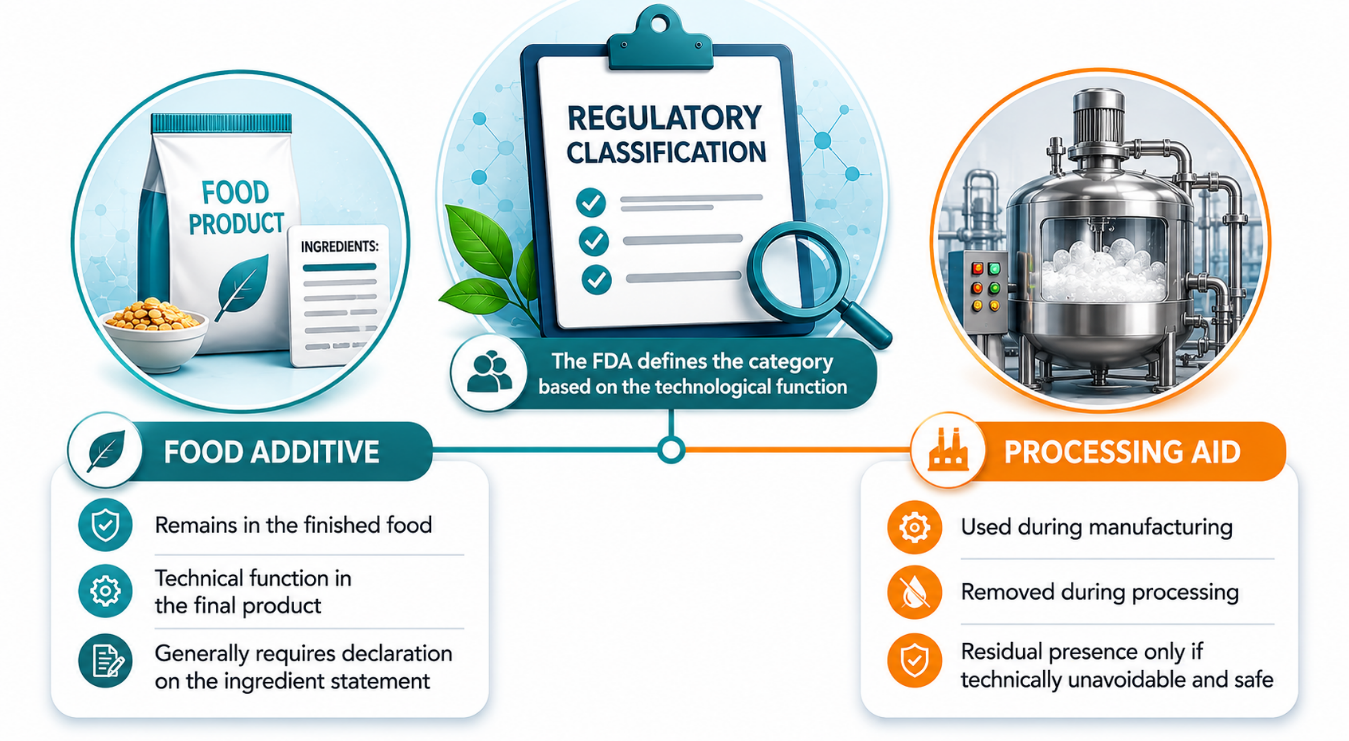
It depends on their regulatory classification and their technological function in the finished food. When antifoam functions as a food additive, meaning it intentionally remains in the product and performs a technical function in the finished food, it generally must be declared in the ingredient statement.
By contrast, when it is used as a processing aid, meaning it is added only during manufacturing to facilitate processing and does not have a significant technical effect in the finished product, the FDA generally does not require label declaration, provided any residual presence is technically unavoidable and safe under the applicable framework.
That exception does not apply if the substance has a significant technical effect in the finished food or if the residues include allergens or substances subject to specific restrictions.
Which food processing sectors use antifoaming agents the most?
Antifoams are used extensively across multiple food industry segments where foam interferes with operating efficiency, heat transfer, or product integrity. The sectors with the highest usage include:
Industrial fermentations
Used in the production of beer, wine, yeast, and enzymes, where foam can collapse biomass or contaminate filtration systems.
Dairy processing
Including milk, whey, and protein concentrate evaporation, where foam reduces evaporator capacity.
Carbonated beverages and juices
Where foam control is necessary during filling and degassing operations.
Sugar refining
Where foam elimination is required in crystallizers and centrifuges.
Vegetable and animal protein processing
Such as soy isolates, whey protein concentrates, and gelatin production.
Sauces and concentrates
Including tomato cooking, dehydrated soups, and purées.
Equipment cleaning operations
Where alkaline detergents generate foam that reduces hydraulic impact and cleaning efficiency.
Let’s start your next project.
Let’s start your next project
Describe your needs and let’s put the plan into action: technical assessment, samples for your validation and approval, and full support to implement the raw material that best fits your requirements and process.
We’re ready!
Why Partner With Us
30 Years Focused on Chemical Excellence
Backed by quality certifications, reliable logistics, and a comprehensive chemical portfolio tailored to your industry.

KOSHER
Certified

Agile
Reformulation

Permanent
Stock

Full Regulatory
Compliance

Technical
Sustainability

Organized
Logistics

Specialized
Consulting