Foam in Industry
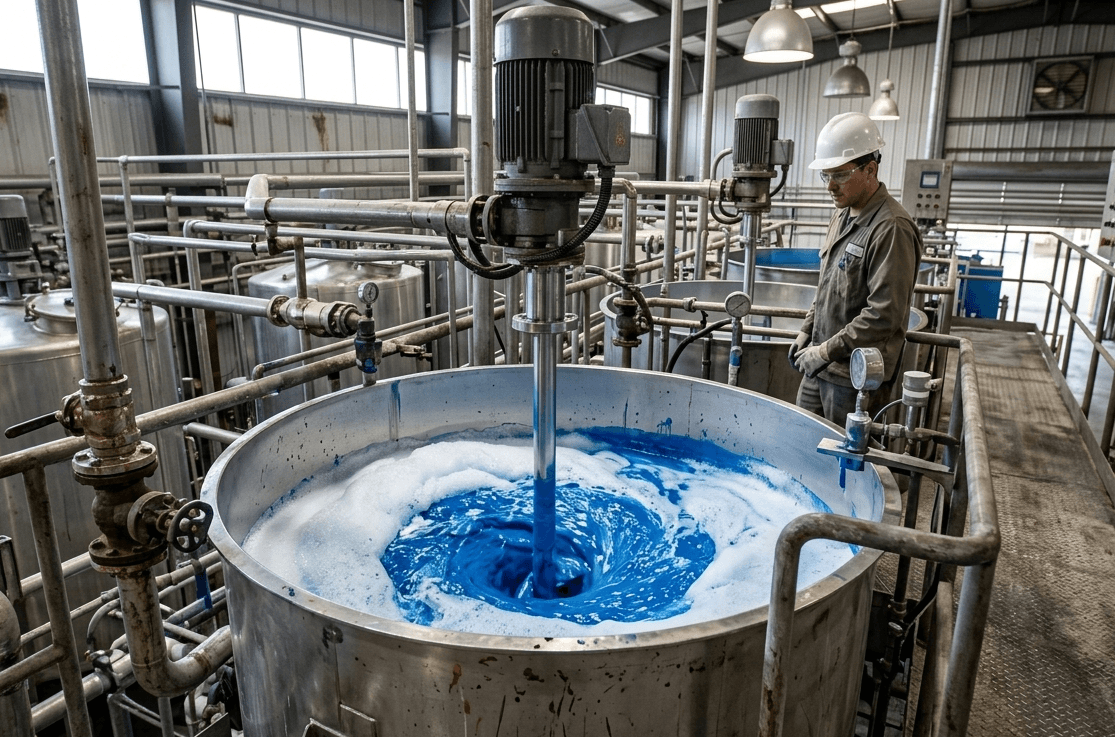
Foam is a frequent problem in industrial processes, generating significant reductions in performance and efficiency in process plants. The scientific literature¹ shows that the problem is particularly relevant in sectors such as: wastewater treatment, anaerobic digestion and biogas, general chemical industry, paint and coatings production, agroindustry, fermentations, istillation and absorption processes.
In recent years, various events associated with excessive foam generation have been documented in different regions of the world. These incidents have had important consequences across diverse productive sectors, from the petroleum industry to fermentation processes.
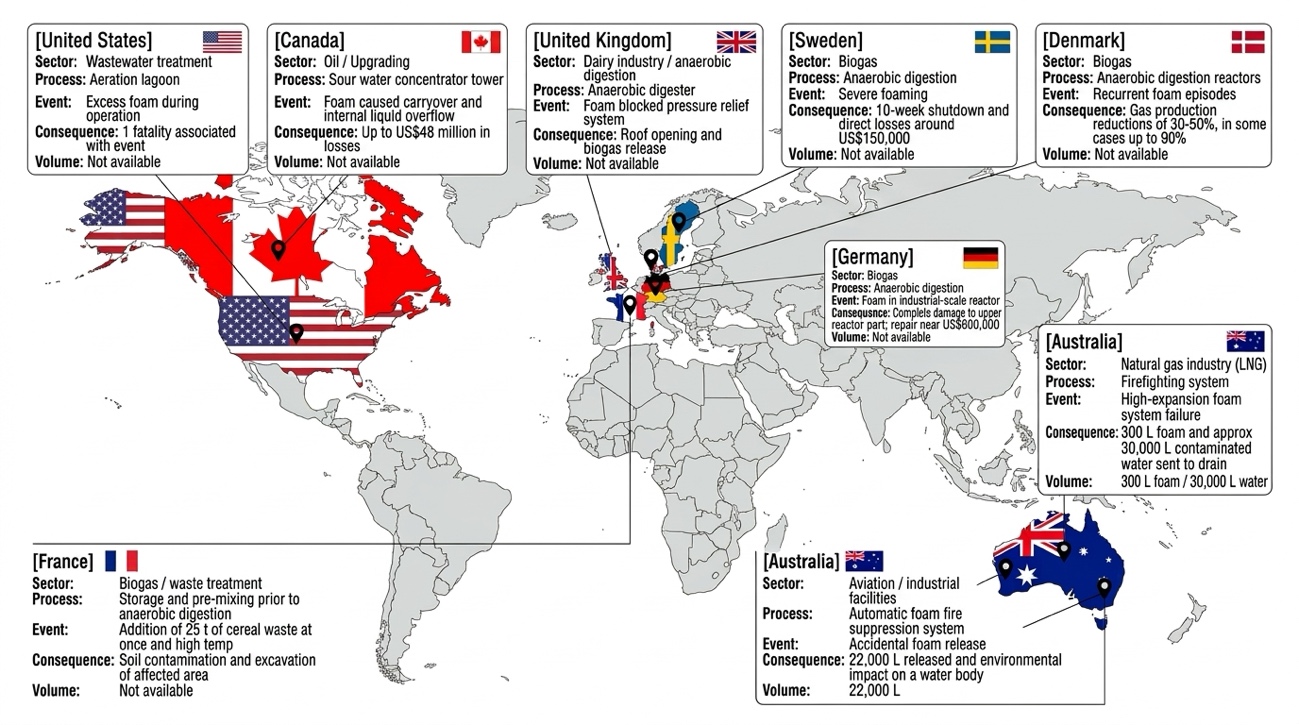
Figure 1. Geographic location of representative events caused by excessive foam generation around the world.¹
In the Colombian context, one of the most recent and most mentioned cases in the press was the generation of large amounts of foam that affected the municipality of Mosquera (Cundinamarca), which originated due to the lack of adequate wastewater treatment from different plants in the region.
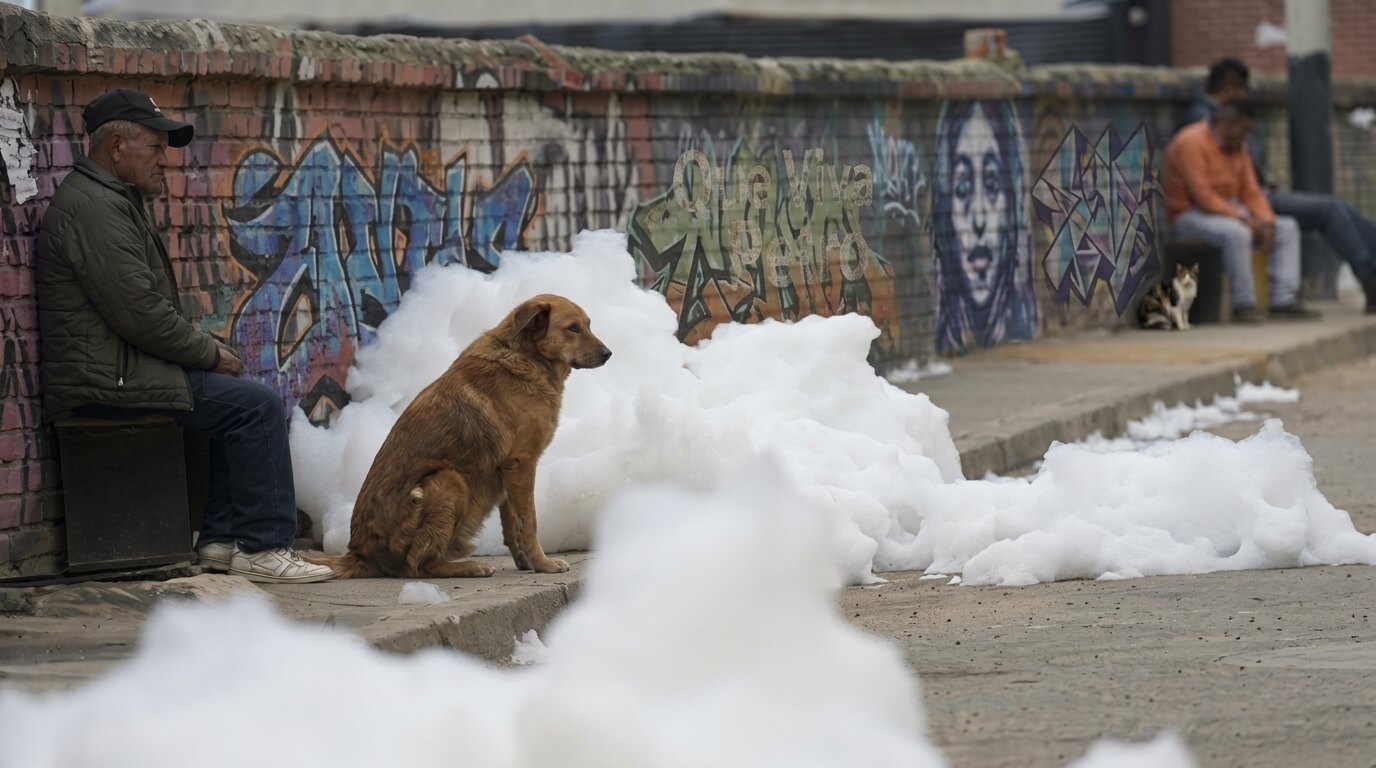
Figure 2. Photo of the impact in the municipality of Mosquera (Cundinamarca) caused by foam.²
Origin of foam
To address this challenge, we must first understand its origin: where does it come from? How is it generated? The formation of foam in industry arises from a common interplay of physical, chemical or biological phenomena, and is driven primarily by the presence of surface-active agents such as synthetic surfactants, natural biosurfactants, proteins, peptides, lipids, and partially degraded polysaccharides which reduce surface tension and stabilize gas-liquid interfaces.
Physical phenomena
The foam formation process is intensified by vigorous mechanical agitation, strong gas sparging (aeration, mixing, or high‑velocity vapor/liquid flows), and entrainment that traps gas in liquids.

Biological phenomena
Biological activity contributes through microbial metabolites, excessive growth of filamentous bacteria, and cell lysis that releases intracellular polymers.

Chemical phenomena
Chemical processes such as saponification of fats in agro-industrial effluents, polymerization reactions, and thermal degradation or contamination in distillation columns generate or concentrate foam‑stabilizing compounds.
Finally, operational upsets, including organic overloading, nutrient imbalances, sudden pH or temperature changes, and accumulation of impurities or suspended solids, exacerbate these conditions by modifying viscosity, ionic strength, and liquid film elasticity, hindering bubble drainage and promoting the formation of persistent, difficult‑to‑control foams.
And the solution?
If we examine the origin of foam generation in processes, we find that it is not simply a matter of changing one variable or modifying a raw material. In most cases, the conditions that favor foam formation are inherent to the process itself and, therefore, are not always easy to modify. This leads us to consider control methods, and among the most well‑known and widely developed in industry for their simplicity and effectiveness is the use of additives known as antifoams.
Industrial antifoams are additives specifically formulated to prevent, control, and eliminate foam formation during industrial processes. They are designed to act quickly and efficiently under specific conditions of temperature, pH, pressure, and composition, avoiding operational problems and improving process performance.
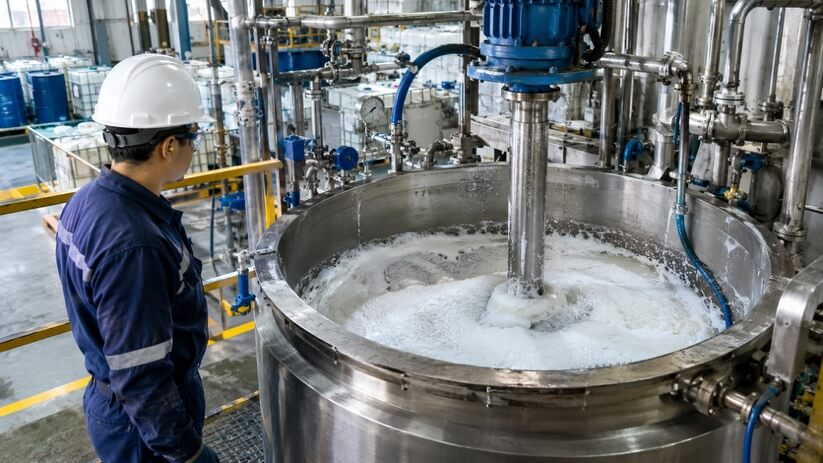
Advantages and benefits of using antifoams
The most prominent antifoams on the market allow foam to be controlled with only small added amounts, usually in parts per million (ppm) that is, a few grams of additive per several liters/kilograms of the process. This helps reduce costs and avoids unnecessary consumption. Moreover, when properly selected, they act without significantly affecting the process or the desired properties of the final product. In this way, the process can continue operating without making substantial changes that would require investment, plant shutdowns, or staff retraining.
The Right Selection Directly Impacts Profitability
Various industrial sectors take advantage of the benefits offered by incorporating antifoams into their production processes. Among others, the following stand out:
- Paint and coatings production: silicone‑based antifoams are used during pigment dispersion and mixing to control foam and prevent defects in the final product.
- Polymerization and resin manufacturing processes: they help control foam generated during reaction, mixing, or agitation, avoiding overflows and operational problems.
- Production of detergents and cleaning products: they are used to control foam during manufacturing stages, especially when using raw materials with high surface‑active activity.
Technical capabilities of Zerachem® products
At Zerachem® we offer a portfolio of solutions for the needs of different industrial processes, grouped into two main presentations: powder products and emulsion products. To analyze the capabilities of antifoams in industry, we have taken two representative products from our industrial portfolio as a reference: Antifoamzera Powder and Antifoamzera I20.
Both products share an active principle based on silicone polymers, specifically polydimethylsiloxane (PDMS); however, their presentations, physicochemical characteristics, and application spectra differ significantly, determining their performance and the conditions under which each can be used.
Antifoamzera Powder
This product is presented as a powder, formulated from hydrophobic additives integrated into a polydimethylsiloxane (PDMS) matrix, which are encapsulated in vehicles that facilitate their efficient dispersion in the foam‑forming medium. Its technical parameters include:
| Technical parameter | Value |
|---|---|
|
PDMS content |
≤ 20 % |
|
Moisture |
< 7.0 % |
|
pH (solution) |
4.0 – 7.0 |
|
Water solubility |
60 – 100 % |
|
Mesh size |
≈ 80 |
|
Shaker test performance (10 seconds at 450 OSC/min) |
≤ 0.5 cm residual foam |
This antifoam is especially effective against difficult foams, acting both on the elimination of surface foam and on the release of entrapped air in the liquid medium, as well as in applications where one or more solid‑state stages are involved. Documented applications for this powder additive include: General chemical industry, Oil and gas, Detergents, Paints and coatings, Textile, Cements, Paper and cardboard.
Antifoamzera I20
The solution we offer with Antifoamzera I20 is a white, viscous emulsion specifically formulated for aqueous media. Its active principle consists of a silicone compound (polydimethylsiloxane, PDMS) with hydrophobic additives, to which emulsifiers are added to ensure rapid and homogeneous dispersion—one of the factors determining its effectiveness. The reference technical information is given in the following table.
| Technical parameter | Value |
|---|---|
|
Total solids content (100 °C) |
22 – 28 % |
|
Viscosity (25 ± 2 °C, Brookfield LVD sp63/20 rpm) |
400 – 4000 cP |
|
Recommended dosage |
100 – 500 ppm |
|
Storage stability (proper conditions) |
1 year |
|
pH (solution) |
4.0 – 7.0 |
|
Shaker test performance (10 seconds at 450 OSC/min) |
≤ 0.5 cm residual foam |
The application spectrum of I20 is especially broad and includes, among others, the following General chemical industry, Textile industry, Acid manufacturing, Bottle washing and general washing industry, Paper production processes, Wastewater treatment, Oil and gas industry.,

KOSHER
Certified

Agile
Reformulation

Permanent
Stock

Full Regulatory
Compliance

Technical
Sustainability

Organized
Logistics

Specialized
Consulting

Free
Samples
At our company you will find a portfolio of solutions designed to meet the specific needs of your process. In addition to our products, we offer specialized technical advice to help you incorporate antifoams effectively or to validate our solutions against the products you currently use.
Explore Our Solutions
Antifoamzera A20
Food-Grade Defoamers
Characteristics:
- White viscous liquid.
- Silicone-based with nonionic emulsifiers.
- Solids content: 22-28%.
- Viscosity: 400-4000 cP.
- pH: 4.0-7.0.
- Dosage: 100-500 ppm.
- Shaker test: ≤0.5 cm foam.
- Stable under centrifugation.
Main Applications:
- Control of foam in aqueous systems.
- Eliminates surface foam and releases entrained air.
- Mixing, fluid transfer, and packaging operations.
- Bottle cleaning operations.
- Water treatment.
Industry:
Food industry and Pharmaceutical industry.
Antifoamzera A30
Food-Grade Defoamers
Characteristics:
- White viscous liquid.
- Silicone-based formulation containing nonionic emulsifiers suitable for applications subject to applicable FDA regulations.
- Solids content: 27-34%.
- Viscosity: 500-2000 cP.
- pH: 3.0-7.0
- Dosage: 50-150 ppm.
- Storage stability: 1 year.
- Shaker test: ≤0.5 cm foam.
- KOSHER certification.
- USP analysis.
Main Applications:
- Distillation processes (including spirits and alcoholic beverages).
- Dairy products (dulce de leche, sweetened condensed milk, powdered milk, milk-based confections).
- Juices, fruit concentrates, jams.
- Fermentation processes involving sugars, grains, fruits, and other biological feedstocks.
- Confectionery (hard candy, soft candy, sugar cubes), chocolates. Fats and oils (butter, margarine).
- Instant soups and broths.
Antifoamzera
Powder Food Grade
Food-Grade Defoamers
Characteristics:
- Slightly yellow powder.
- PDMS ≤20%.
- Moisture <7.0%.
- pH: 4.0-7.0.
- Water solubility: 60-100%.
- Mesh size: ≈80.
- Shaker test: ≤0.5 cm foam.
Main Applications:
- Designed for foam control in dry-blend formulations and fermentation processes.
- Alcoholic beverage distillation, dairy processing, coffee, juices, jams, confectionery, chocolates, seasonings.
Industry:
Food and beverage industry; Pharmaceutical industry.
Antifoamzera I30
Industrial Defoamers
Characteristics:
- White viscous liquid.
- Solids content: 27-34%.
- Viscosity: 500-2000 cP.
- Silicone emulsion.
- Shaker test: ≤0.5 cm foam.
Main applications:
- Foam control in demanding environment
- Elimination of surface foam and entrained air.
- Particularly effective in gas-liquid separation systems.
Industry:
Chemical industry, textile industry, Acid production, Bottle cleaning operations, paper, water treatment, oil and gas (extraction, natural gas production, phase separation).
Antifoamzerabreak W
Industrial Defoamers
Characteristics:
- Milky white to slightly beige liquid (ethoxylated alcohols + vegetable oils base, silicone-free).
- Solids: 18-30%.
- pH: 3.0-7.0.
- Completely miscible in water.
- Biodegradable.
- Shaker test: ≤0.5 cm foam.
Main applications:
- Prevents and eliminates foam in aqueous industrial systems.
- Industrial washing, agrochemical and fertilizer formulation, water treatment, manufacture of paints, varnishes, adhesives, and textile processes (washing, dyeing, finishing).
Industry:
Chemical industry, industrial washing, agrochemicals, wastewater treatment, paper and pulp, paints and coatings, textile, adhesives and sealants.
Antifoamzera Non-Silicone
Industrial Defoamers
Characteristics:
- White viscous liquid (aliphatic oil base, silicone-free).
- Solids content: 22-28%.
- Viscosity: 400-4000 cP.
- pH: 4.0-7.0.
- Dosage: 100-500 ppm.
- Storage stability: 1 year.
- Shaker test: ≤0.5 cm foam.
Main applications:
- Targeted foam control for industrial processing applications.
- Prevents foam formation throughout the production process, from mixing to final packaging.
Industry:
Chemical industry, Acid production, Bottle cleaning operations, agrochemical manufacturing, paper production, water treatment, vinyl paint industry.
Antifoamzerabreak
Industrial Defoamers
Characteristics:
- Dark brown viscous liquid (ethoxylated alcohol + 80% active palm vegetable oil base).
- Solids: 75% min.
- Viscosity: max. 2500 cP.
- pH: 3.0-7.0.
- Stability: 1 year.
- Biodegradable.
- Shaker test: ≤0.5 cm foam.
Main applications:
- Reduces and prevents foam by destabilizing foam films and lowering surface tension.
- Bottle cleaning operations, agrochemical and fertilizer manufacturing, water treatment, solvent-based paints, varnishes, coatings, textile finishing, adhesives, and sealants.
Industry:
Chemical industry, industrial washing, agrochemicals, paper and pulp, water treatment, paints and coatings, textile, adhesives and sealants.
Antifoamzera I20
Industrial Defoamers
Characteristics:
- White viscous liquid.
- Solids content: 22-28%.
- Viscosity: 400-4000 cP.
- pH: 4.0-7.0.
- Dosage: 100-500 ppm.
- Stable under centrifugation.
- Shaker test: ≤0.5 cm foam.
Main applications:
- Foam control in aqueous media.
- Eliminates surface foam and releases entrained air.
- Mixing, fluid transfer, and packaging operations.
Industry:
Chemical industry in general, textile industry, Acid production, Bottle cleaning operations, paper production, wastewater treatment, oil and gas.
References
- Hannes Leuner, et al. Overcoming unwanted foam in industrial processes of the chemical and food industry – an ongoing survey. Chem. Eng. Res. Des. 163, 2020, 281-294.
- Universidad de Los Andes. El gran problema detrás de la espuma en Mosquera https://www.uniandes.edu.co/es/noticias/ingenieria/el-gran-problema-detras-de-la-espuma-en-mosquera (Ingreso 07/09/2026).
- Julian Thünnesen, et al. Resonant Ultrasonic Defoaming in Aqueous Evaporation/Boiling Processes at Different Size Scales. Chem. Eng. Technol. 2022, 45, 8, 1380–1388.
- Hannes Leuner, et al. Foam in Absorption Columns with Structured Packings – Part 2: Inhibition and Destruction. Chem. Eng. Technol. 2022, 45, 8, 1431–1437
Frequently Asked Questions
What are industrial antifoams?
Industrial antifoams are additives specifically formulated to prevent, control, and eliminate foam formation during industrial processes. They are designed to act quickly and efficiently under specific conditions of temperature, pH, pressure, and composition, avoiding operational problems and improving process performance.
What types of antifoams are there?
Antifoams are mainly classified according to their composition and mechanism of action. The most used include silicone antifoams, oil‑based, polymeric, alcoholic, and powder antifoams, as well as hybrid formulations designed for specific conditions. It is very important to note that there is no universal product and that the choice depends on the type of process, temperature, pH, medium, and final product requirements.
What do antifoams do?
At the microscopic scale, the antifoams act on foam bubbles, destabilizing the film that holds them and promoting their rapid rupture. In this way, it controls or prevents foam accumulation, helping to maintain the efficiency, capacity, stability, and safety of the process.
What can be used as an antifoam?
A wide variety of products can be used as antifoams, such as synthetic or natural oils, silicone polymers, alcohols, waxes, and polyols. However, in the vast majority of cases, specific formulations are required that may contain surfactants or hydrophobic particles.
What are silicone antifoams used for?
Silicone‑based antifoams (polydimethylsiloxane, PDMS) are used to prevent and control foam formation in industrial processes. They act rapidly on bubbles, promoting their rupture and preventing accumulations that can affect process efficiency, generate overflows, or reduce equipment capacity. These additives are commonly found in sectors such as food, chemicals, pharmaceuticals, water treatment, and fermentation, where they are used in very small proportions (ppm).
Is vinegar an antifoam?
In a technical sense, vinegar is not a antifoam, although under certain conditions it can temporarily reduce or break foam. However, its efficiency is not comparable with that of products designed and formulated for that purpose.
Regulatory and Technical Disclaimer
This blog and all the content published herein, including texts, graphics, tables, and application examples, are strictly informational and educational in nature. Their purpose is to offer a general and didactic overview of industrial antifoams and the industrial processes in which they intervene.
For any real application, it is essential to consult and strictly follow the Technical Data Sheet and the Safety Data Sheet (MSDS) of the product in question, provided by the authorized distributor or supplier. These contain purity specifications, storage conditions, recommended dosages, handling warnings, and usage restrictions that must be mandatorily observed.
Why Partner With Us
30 Years Focused on Chemical Excellence
Backed by quality certifications, reliable logistics, and a comprehensive chemical portfolio tailored to your industry.

KOSHER
Certified
Agile
Reformulation
Permanent
Stock
Full Regulatory
Compliance
Technical
Sustainability
Organized
Logistics
Specialized
Consulting
Free
Samples
PRODUCT SOLUTIONS
Get direct access to our specialty product line: antifoams, emulsions, degreasers, and more.
INDUSTRY SOLUTIONS
Explore the solutions we’ve already formulated to address the unique demands of your sector.
Let’s start your next project.
Let’s start your next project
Describe your needs and let’s put the plan into action: technical assessment, samples for your validation and approval, and full support to implement the raw material that best fits your requirements and process.
We’re ready!